Give each idea room
Clear sentences and transitions are easier to assess by listening to the recording itself. Introduce unfamiliar words with an appropriate explanation already included in the approved content.
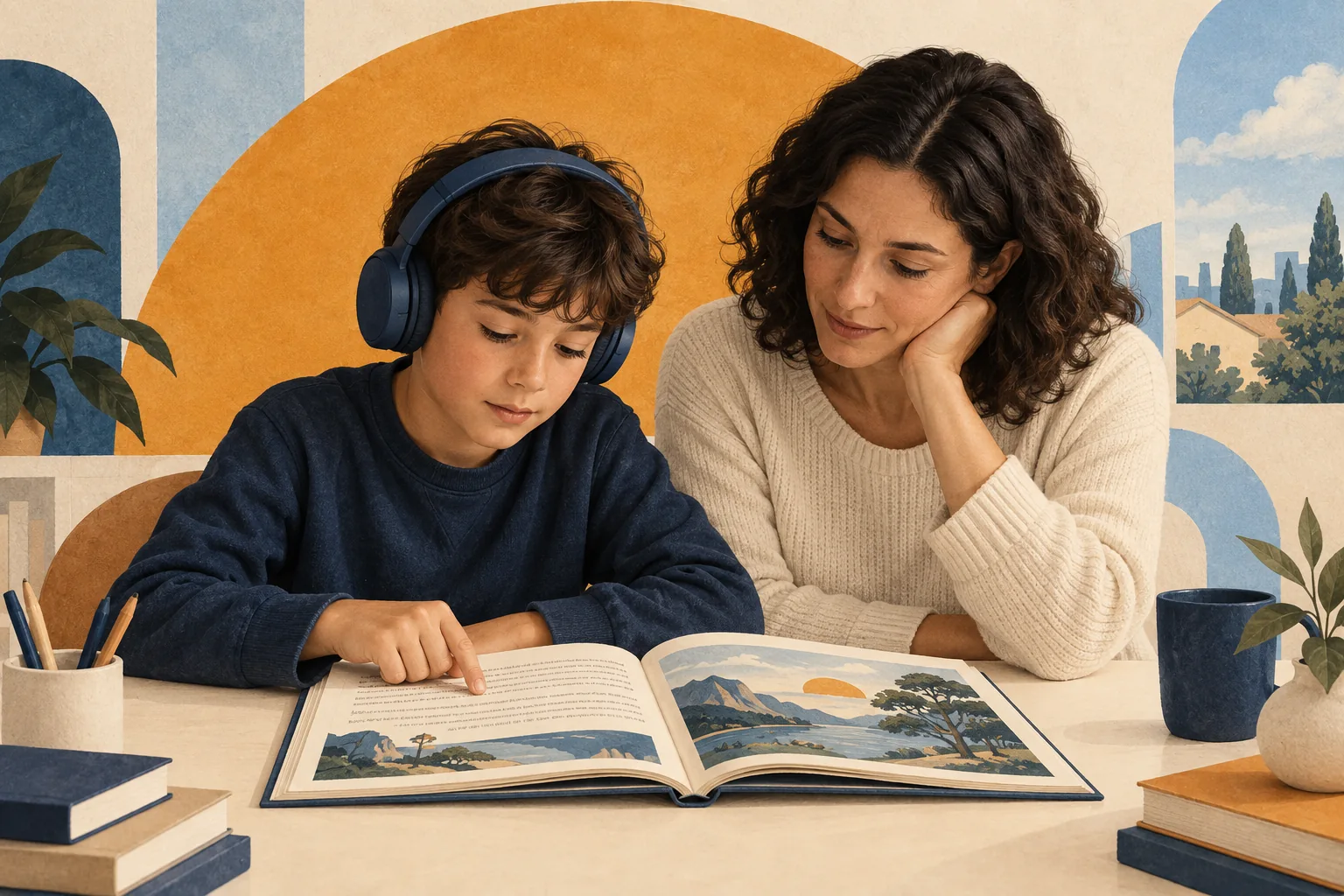
A child’s question, a short explanation or a story about everyday life: a listening edition can accompany the first steps into a text. Children can listen, read and explore further with an adult.
Speaking an explanation faster or in an exaggeratedly cute voice does not make it suitable. Word choice, manageable ideas and a calm delivery matter more. Shape the script around the intended age group and the actual content.
Clear sentences and transitions are easier to assess by listening to the recording itself. Introduce unfamiliar words with an appropriate explanation already included in the approved content.
A photograph or drawing can still invite closer attention. If an explanation depends on a visual, the script makes that relationship clear. Audio does not promise to replace every piece of visual information.
A children’s website explains a nature topic with a short text and a drawing. A trial can turn it into a coherent listening edition. The content team remains responsible for the science; this example concerns the presentation alone.
Instead of “Look at the arrow in the diagram,” the script names what the drawing shows. The description is drawn from the actual illustration, rather than invented.
A clearly visible player provides a starting point. Children or accompanying adults can pause, repeat a passage and return to the written text. This does not promise automatic word highlighting.
In a multilingual family, another audio edition can offer a different starting point. Suitable languages and voices are agreed with the provider and reviewed before publication.
Children learning to read, slower readers and children with dyslexia can also explore text through listening. This is an additional option, not a therapy or a guarantee of stronger reading skills. Shared reading and educational support retain their own value.
Our samples present general German voice profiles, rather than a role specifically qualified for children. We review whether the tone and pronunciation suit your chosen text.
A single approved knowledge text is enough to begin. Discuss the age group, adult support and wording before deciding on larger topic collections or additional languages.
No. It offers another way to explore information. Learning to read, shared reading and targeted support remain separate activities.
This page focuses on early reading and supported children’s content. Course notes, professional training and adult learning groups are covered in Education and learning.
Bring a page that matters to you. Let’s discover how your content sounds.